
Last Updated: October 23, 2026
Quick Summary
The best sustainable outdoor clothing brands in 2026 are the ones that publish proof, not pledges. Patagonia leads our six-criteria scoring with 12 out of 12, followed by Vaude at 11, while Fjällräven and Picture Organic Clothing each score 9. We score sustainable outdoor clothing on materials, chemical safety, labor transparency, durability and repair, end of life, and certification.
- The outdoor clothing market grew from USD 19.36 billion in 2025 to USD 20.95 billion in 2026.
- A brand earns a 2 in our scoring only where the evidence is specific and verifiable.
- Look for a PFAS-free statement tied to a specific product line, not a general website banner.
- Supply chain transparency means a brand publishes where its clothes are made and who makes them.
- The weakest point in sustainable outerwear is usually the zipper and seam tape, not the fabric.
Table of Contents
- What Makes a Sustainable Outdoor Clothing Brand in 2026
- The Best Sustainable Outdoor Clothing Brands 2026: A Comparison Table
- Sustainable Outdoor Clothing Materials That Actually Hold Up
- Ethical Outdoor Clothing Brands: What Fair Labor and Transparency Look Like
- Outdoor Clothing Repair Programs and Take-Back Schemes
- How to Choose Ethical Outdoor Clothing: A Buying Framework
- Performance Trade-Offs and Field Testing: What the Spec Sheet Misses
- Frequently Asked Questions
What Makes a Sustainable Outdoor Clothing Brand in 2026
The outdoor clothing market grew from USD 19.36 billion in 2025 to USD 20.95 billion in 2026, according to the Outdoor Clothing Market global forecast 2026-2032. Growth like that invites greenwashing, so the best sustainable outdoor clothing brands in 2026 are the ones that publish proof, not pledges. Below, we explain how to score any brand in about ten minutes.
The Six Criteria That Separate Claims From Proof
Sustainable outdoor clothing is apparel made with lower-impact materials, ethical labor practices, and a documented plan to reduce environmental harm across the product's life. We score brands on six criteria: material content, chemical safety, labor transparency, durability and repairability, end-of-life programs, and third-party certification.
The Best Sustainable Outdoor Clothing Brands 2026: A Comparison Table
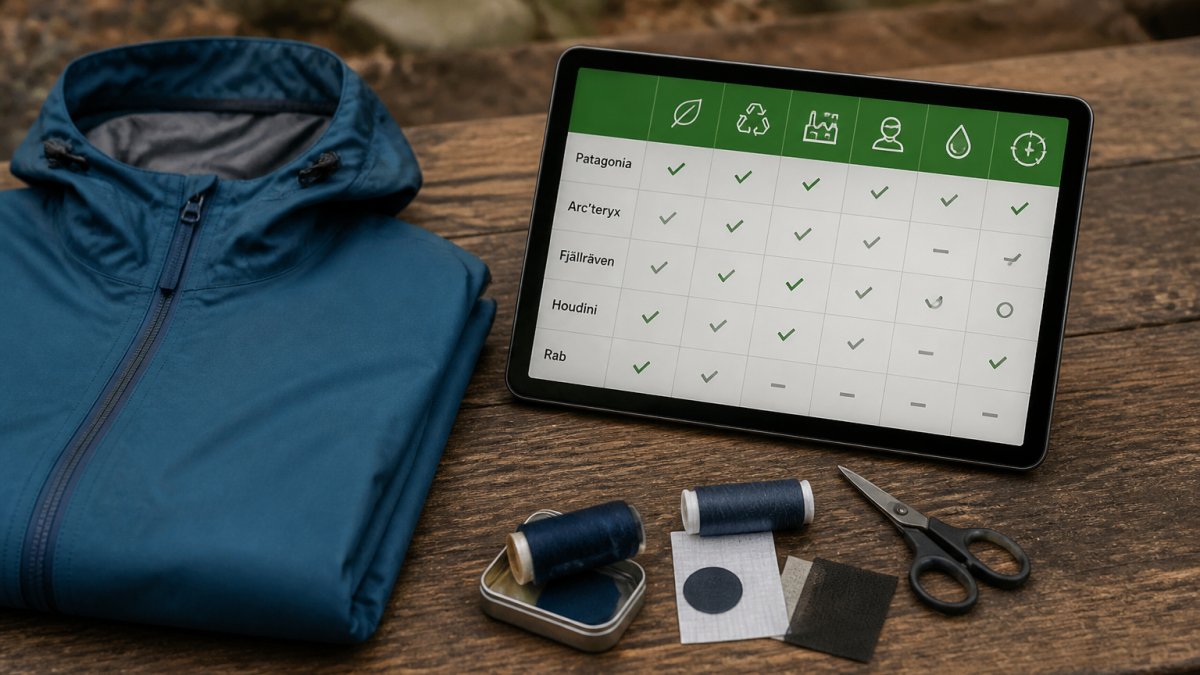
Most roundups list brands and describe them. This one scores them, so you can see where each brand is strong and where it is silent. The table below applies the six criteria from the previous section to brands that are widely cited in 2026 outdoor-apparel coverage. Scores are a reading of publicly available evidence as of October 2026, not a paid ranking, and they are deliberately conservative: a brand only earns a 2 where the evidence is specific and verifiable.
| Brand | Materials | Chemical safety | Labor transparency | Durability & repair | End of life | Certification | Total /12 |
|---|---|---|---|---|---|---|---|
| Patagonia | 2 | 2 | 2 | 2 | 2 | 2 | 12 |
| Vaude | 2 | 2 | 2 | 2 | 1 | 2 | 11 |
| Fjällräven | 2 | 1 | 1 | 2 | 1 | 2 | 9 |
| Picture Organic Clothing | 2 | 2 | 1 | 1 | 1 | 2 | 9 |
| Columbia | 1 | 1 | 1 | 1 | 1 | 1 | 6 |
| The North Face | 1 | 1 | 1 | 2 | 1 | 1 | 7 |
How to Read the Scores
A 12 does not mean a brand is perfect; it means the brand publishes enough evidence for a shopper to verify each claim.
What the Table Cannot Tell You
A score is a starting filter, not a verdict. Two brands with the same total can fail in different places: one may have excellent materials but no repair network, another the reverse. Use the table to shortlist two or three brands, then check the specific garment you want against the product-level tests in the next sections. A brand-wide PFAS-free banner does not guarantee the jacket you are holding is PFAS-free, and a published factory list does not guarantee fair wages at every tier. The score tells you where to look; the product page and the brand's public documents tell you what is true.
Sustainable Outdoor Clothing Materials That Actually Hold Up
Materials decide how a garment performs and how long it lasts. Recycled polyester dominates shells and insulation because it handles weather resistance well. Organic cotton and hemp fabric suit base layers and casual pieces, while responsible wool earns its place in insulation. The catch is that a fiber being natural does not make it low-impact: water use, chemical use, and responsible sourcing all shift the number. Ask what the fabric is, who certified it, and whether the brand publishes that per product.
PFAS-Free Weatherproofing: What to Check on the Label
PFAS are the fluorinated chemicals that make water bead on a jacket, and they persist in the environment for a very long time. Look for an explicit "PFAS-free" or "PFC-free" statement tied to a specific product line, not a general website banner. If a brand cannot tell you which jackets use which finish, treat the whole range as undisclosed.
Ethical Outdoor Clothing Brands: What Fair Labor and Transparency Look Like
Supply chain transparency means a brand publishes where its clothes are made and who makes them. That is the whole test.
Outdoor Clothing Repair Programs and Take-Back Schemes
Repair is the most credible durability claim a brand can make. A repair program, spare parts, or a take-back scheme signals that the company expects its clothing to last and has planned for circularity. When you compare brands, ask three questions: Do they repair, do they resell used items, and do they recycle what cannot be fixed?
How to Choose Ethical Outdoor Clothing: A Buying Framework
Choosing well comes down to matching the garment to your actual use and then verifying the claims that matter for that garment. Work through this checklist before you buy, and treat each box as a question you can answer with a document, a product page, or a customer-service reply, not a brand slogan.
- Confirm the main fabric and its certification, and check whether the certification applies to this product or only to the brand's overall range
- Check for a PFAS-free statement on the specific product page, not just the sustainability landing page
- Look for a published factory list and, where available, audit outcomes or wage data
- Confirm a repair or take-back option exists for this product category, and read the warranty terms on zippers and seam tape
- Calculate cost per wear using expected lifespan and repair options, not sticker price
- Check sizing range, fit options, shipping regions, and regional availability before you commit
2026-Specific Verification: Dated Sources Beat Broad Claims
Sustainability pages age badly. A brand that was PFAS-free across its range in 2023 may have added a new membrane since, and a factory list published two years ago may not reflect current suppliers. In 2026, the practical test is whether the brand's claims are dated and specific. Look for a policy page with a last-updated date, a product-level chemical statement, and a supplier list that names factories rather than countries. If a brand's sustainability page has no date and no product-level detail, treat its claims as unverified for your purposes, even if the brand is well known.
Cost Per Wear and Repair Economics
Divide the price by the number of times you expect to wear the item, then add the expected cost of repairs.
Sizing and Regional Availability
A recommendation is only useful if you can buy the garment in your size and region. Compare size ranges, fit options such as women's-specific and extended sizes, and whether the brand ships to your country or sells through local retailers. Regional availability also affects repair and warranty service: a brand with a repair center on your continent is more useful than one that requires international shipping. Check these before you fall for the fabric story.
Performance Trade-Offs and Field Testing: What the Spec Sheet Misses
Spec sheets measure breathability and weather resistance in labs, not on a windy ridge. Field testing reveals the gaps: a shell that breathes well in a shop can feel clammy under a pack, and a fabric that repels rain can stiffen in the cold. Read reviews from people doing your activity, not the brand's own copy. Trade-offs are normal. Pick the ones that match your terrain, and accept that no single jacket wins everywhere.
Frequently Asked Questions
What should I look for in sustainable outdoor clothing in 2026?
Check five things: the material (recycled polyester, organic cotton, hemp or responsible wool), whether the weatherproofing is PFAS-free, a named third-party certification, published factory information, and a repair or take-back scheme. A brand that publishes all five is doing more than marketing.
Are sustainable outdoor clothes durable enough for hiking?
Durability depends on fabric weight, construction and care, not on whether a garment is marketed as green. Recycled polyester and responsibly sourced wool both perform well on trail when the seams are reinforced and the fabric is rated for the conditions. Ask how many washes the weatherproof coating is rated for, and check whether the brand offers repairs. A jacket you can fix twice will outlast two cheap replacements on any trek.
Which outdoor brands offer clothing repair or take-back programs?
Many larger outdoor brands now run repair centers and take-back schemes, and smaller labels often handle repairs directly by post. Before buying, ask three questions: is repair free or paid, how long does it take, and will they resell or recycle the item if it cannot be fixed. Repair programs extend product lifespan, which cuts the carbon emissions and water use tied to making a replacement garment.
Is recycled polyester a sustainable choice for outdoor apparel?
Recycled polyester keeps plastic bottles out of landfill and uses less energy than virgin polyester, so it is a real improvement, though it still sheds microplastics during washing. Use a filter bag or Guppyfriend-style wash bag, wash less often and air dry. Pair it with durable construction and a repair program, and the overall environmental impact drops further than switching fabric alone would achieve.
The hard part is not finding brands that talk about sustainability. It is finding proof you can check before you spend. At Cedar Peak "Keep It Wild," we design apparel for people who feel at home under open skies, with scenic mountain, forest, and wildlife prints built for trails and campfires alike. Explore our collection and keep it wild.
